

SitterTree Resources: Insights on Babysitting and Childcare

- View all
- Sitter Tips
- Family Tips
- Tips for Toddlers
-

Charlotte, NC, is a vibrant city brimming with fun, educational, and exciting activities perfect for families. Whether you’re a local or visiting, there’s something for everyone. This guide highlights the top things to do in Charlotte with kids, a mix of must-see attractions and a few budget-friendly gems.
Things to do in Charlotte with younger kids
Discovery Place Science
Discovery Place Science is a hands-on science museum that kids will love. With interactive exhibits, live animal encounters, and an IMAX theater, it provides a fun and educational experience.
Cost: $28-$29 for adults, $23-$24 for children (2-13), free for children under 2. Discounts on tickets purchased online.
Stroller Accessible: Yes
Food: On-site café available
Address: 301 N Tryon St, Charlotte, NC 28202
Freedom Park
Known as Charlotte’s Central Park, Freedom Park offers 98 acres of beautiful landscapes, playgrounds, walking trails, and a 7-acre lake. It’s a fantastic spot for a picnic, a leisurely walk, or some outdoor playtime. Best of all, it’s free!
Cost: Free
Stroller Accessible: Yes
Route Length: Numerous walking trails, approximately 2 miles total
Food: Nearby food trucks and picnic spots.
Address: 1900 East Blvd, Charlotte, NC 28203
ImaginOn: The Joe & Joan Martin Center
This unique library and children’s theater is designed to inspire and educate kids of all ages. ImaginOn offers free storytimes, arts and crafts sessions, and a variety of interactive exhibits. Check their schedule for free performances and events.
Cost: Free
Stroller Accessible: Yes
Food: Nearby restaurants and cafés
Address: 300 E 7th St, Charlotte, NC 28202

SEA LIFE Charlotte-Concord Aquarium
Located in the Concord Mills Mall, SEA LIFE Aquarium offers an underwater adventure with a 360-degree ocean tunnel, interactive touch pools, and over 5,000 sea creatures. It’s a magical experience for young kids.
Cost: $23.99 for adults, $18.99 for children (3-12), free for children under 3
Stroller Accessible: Yes
Food: Nearby food court within the Concord Mills Mall
Address: 8111 Concord Mills Boulevard, Concord, NC 28027
Daniel Stowe Botanical Garden
This stunning garden offers seasonal displays, a conservatory dedicated to tropical plants and orchids, and a children’s garden with water features and interactive elements. It’s a great place for kids to explore nature.
Cost: $14.95 for adults, $7.95 for children (2-12), free for children under 2
Stroller Accessible: Yes
Food: On-site café available
Address: 6500 S New Hope Rd, Belmont, NC 28012
Things to do in Charlotte with older kids
NASCAR Hall of Fame
For racing enthusiasts, the NASCAR Hall of Fame is a thrilling experience. Older kids can explore interactive exhibits, racing simulators, and historic race cars. Discounts are available for children, and kids under 5 get in free.
Cost: $25 for adults, $18 for youth (8-12), free for children under 5
Stroller Accessible: Yes
Food: On-site café available
Address: 400 E Martin Luther King Jr Blvd, Charlotte, NC 28202
National Whitewater Center
This outdoor recreation center offers a variety of activities including whitewater rafting, kayaking, rock climbing, zip-lining, and mountain biking. It’s perfect for older kids who love adventure and the great outdoors.
Cost: Activity passes range from $59 to $74; parking is $6
Stroller Accessible: Limited areas
Food: On-site restaurants and picnic areas
Address: 5000 Whitewater Center Pkwy, Charlotte, NC 28214
Carolina Raptor Center
Located in Latta Nature Preserve, this center is dedicated to the conservation of birds of prey. Older kids will enjoy the live bird presentations, trail hikes, and seeing the wide variety of raptors up close.
Cost: $12 for adults, $8 for children (4-12), free for children under 4
Stroller Accessible: Yes
Route Length: Various trail lengths within Latta Nature Preserve
Food: Nearby picnic areas
Address: 6000 Sample Rd, Huntersville, NC 28078
Mint Museum Uptown
The Mint Museum Uptown showcases American, European, and contemporary art. They offer free admission on Wednesday evenings, making it a great opportunity to introduce older kids to the world of art without breaking the bank.
Cost: $15 for adults, $10 for college students and seniors, $6 for children (5-17), free for children under 5. Free admission on Wednesdays from 5 PM to 9 PM.
Stroller Accessible: Yes
Food: On-site café available
Address: 500 S Tryon St, Charlotte, NC 28202
Charlotte Motor Speedway
Take older kids to experience the thrill of motorsports at Charlotte Motor Speedway. The Speedway offers tours that include a close-up look at the track, pit areas, and even a ride around the oval. It’s a must-visit for any racing fan.
Cost: Tours start at $12 for adults and $10 for children
Stroller Accessible: Yes
Food: On-site concessions
Address: 5555 Concord Pkwy S, Concord, NC 28027
You’re ready to explore!
Charlotte offers a wide range of activities that are perfect for families, from exciting adventures to educational experiences and relaxing outings. With a blend of budget-friendly and splurge-worthy options, there’s something for every child to enjoy. Next time you’re planning a family outing in Charlotte, consider these top destinations to ensure a fun and memorable experience for your children.

Looking for something to do in Charlotte without the kiddos?
Check out our list of date night ideas. And if you need a sitter, SitterTree has local, background-checked sitters available on-demand in Charlotte. You can get $20 off your first sitter at the link below.
Get $20 off your first sitter -

Washington, DC is chock-full of history and culture-but what’s there to do as a family with littles? Good news: there are tons of family-friendly options, you could spend an entire week or more exploring! Whether you have toddlers, school-aged children, teenagers, or some combination, there is no shortage of activities in all parts of town. This guide breaks down the top things to do in DC with kids by age group. Let’s dive in!
Things to do in DC with younger kids
Smithsonian National Zoo
The National Zoo is a top destination for families with young kids-and truth be told, it features something interesting for people of all ages. The National Zoo is home to over 2,200 animals, including pandas, lions, and elephants. Another reason to visit? It’s consistently ranked one of the top Zoos in the United States. At the Kids’ Farm area, children can get up close with cows, alpacas, hogs, donkeys, goats, chickens and fish. A must for animal-obsessed little ones! Not to mention, the Zoo is always free to visit.
Cost: Free admission, but parking is $30
Stroller Accessible: Yes, strollers are available for rent
Route Length: The zoo recommends setting aside 2-3 hours for a full tour
Food: Various food options available.
Other Info: Requires free entry passes, which should be reserved online
Address: 3001 Connecticut Ave NW, Washington, DC 20008
National Children’s Museum
This interactive museum was designed specifically for kids up to age 12. A full or half-day experience, the National Children’s Museum blends science, technology, engineering, arts, and math into playful exhibits perfect for young minds. This indoor museum is perfect for seeking refuge on hot summer days or cool, snowy ones. Tickets are required for admission, and children under 1 are free! It’s like a playground for little Einsteins!
Cost: $18.95 for children over 1 year old and adults
Stroller Accessible: Yes
Food: Café available
Other Info: Sensory backpacks and wheelchairs available to borrow
Address: 1300 Pennsylvania Ave NW, Washington, DC 20004
Kenilworth Park & Aquatic Gardens
A hidden gem in DC, this national park offers a peaceful retreat with beautiful water lilies and lotus flowers. Make it a true nature adventure for kids as they explore the gardens, and ask them to look for turtles, frogs, and beavers-all animals that call this sanctuary home. There are several historic ponds and trails to enjoy, including a half-mile paved loop and a quarter-mile dirt path for more adventurous explorers. With countless birding opportunities, Kenilworth Park is a nature lover’s paradise right in the city. This activity is truly refreshing for kids of all ages-and is totally free for everyone to visit. Of course, a day spent outside is sure to tire the kids out in the best way. Did somebody say naptime?
Cost: Free
Stroller Accessible: Yes, on most trails
Route Length: Ranging from 1/3 mile to 1/2 mile, going in a loop
Food: No food facilities; visitors are encouraged to bring their own.
Address: 1550 Anacostia Ave NE, Washington, DC 20019

The Capital Wheel
Located at National Harbor, The Capital Wheel is a massive Ferris wheel overlooking the water- with spectacular views of the nation’s capital, Washington Monument, National Harbor and the Potomac River. It’s comfy, cozy, and outfitted with AC and heat, making it perfect for any kind of weather. The Ferris wheel is a gentle ride, and the organization confirms it’s safe for pregnant women, babies, and small children. If your kiddo can handle the 12-15 minute ride in the enclosed gondola, it’s sure to be fun for the whole family. Kids under 2 ride free!
Cost: $18.70 for adults, $14.95 for children (3-11), free for children under 3
Stroller Accessible: No, space provided to park it during the ride
Ride Length: Approximately 12-15 minutes
Air-conditioned: Yes
Food: Nearby food options available
Address: 141 American Way, National Harbor, MD 20745
Yards Park
A family-friendly park with a beautiful waterfront, Yards Park features an interactive fountain and wading pool, perfect for younger kids to cool off in the summer. The park also has plenty of open space for picnics and play. Don’t forget the sunscreen!
Cost: Free
Stroller Accessible: Yes
Food: No food or drink permitted near the water feature area
Other Info: Water features are closed Monday-Wednesday
Address: 355 Water St SE, Washington, DC 20003
Things to do in DC with older kids
International Spy Museum
If your kids are into intrigue and espionage, the International Spy Museum is a must-visit. This museum is packed with interactive exhibits that let kids dive into the world of spies (Bond, James Bond!). They can test their skills with activities like crawling through an air duct or creating a secret identity. It’s educational, thrilling, and perfect for any budding spy. Bonus: children 6 and under get in for free!
Cost: Around $32 for adults (13-64), Around $20 for youth (7-12), free for children under 6. Around $28 for seniors (65+) – Ticket costs vary; Save up to 30% by booking in advance.
Stroller Accessible: Stollers must fit within dimensions listed on their website. Storage available for larget strollers.
Food: Drinks and treats available in the Spy Museum Store and nearby food options available
Address: 700 L’Enfant Plaza SW, Washington, DC 20024
National Air and Space Museum
For those fascinated by the world of aviation and space exploration, the National Air and Space Museum will be a huge hit! With a collection that includes the Wright brothers’ plane, Apollo 11 command module, and interactive flight simulators, your kids will be inspired and thrilled during the whole visit. Entry is free for everyone but make sure to reserve your time slot on their website first!
Cost: Free
Stroller Accessible: Yes
Food: Café available
Other Info: Advance timed-entry passes required
Address: 600 Independence Ave SW, Washington, DC 20560
Rock Creek Park
Rock Creek Park is an ideal spot to burn off some extra energy and enjoy nature. You and your kiddos can explore miles of hiking trails, go horseback riding, or visit the nature center, which offers planetarium shows and educational programs. Check out their calendar of events for activities like Books and Beyond with a Ranger, Stellar Star Show, and more. It’s a natural adventure right in the city, perfect for a day of outdoor fun.
Cost: Free with metered parking at $2.30/hr for 3 hours max
Stroller Accessible: Varies by trail
Route Length: Numerous trails of varying lengths
Address: 5200 Glover Rd NW, Washington, DC 20015
Escape Room Live DC
Challenge the whole crew with a visit to Escape Room Live DC. They offer themed rooms where teams must solve puzzles to escape within a set time. It’s a fun and interactive way to develop problem-solving skills and teamwork, and it’s great for a group of friends or family members. Family night out or birthday ideas, anyone?
Cost: $36.99 per person $10 off per player before 11 am
Stroller Accessible: No
Other Info: Best suited for older children and teenagers due to complexity
Address: 723 8th St SE, Washington, DC 20003
Smithsonian National Museum of American History
If your kid(s) have realized their inner history buff, The National Museum of American History is the perfect spot to check out! They can see the original Star-Spangled Banner, explore the history of transportation, or check out the interactive exhibits in the Innovation Wing. It’s an opportunity to learn about America’s past in a dynamic and hands-on way and admission is completely free.
Cost: Free
Stroller Accessible: Yes
Food: Café available
Address: 1300 Constitution Ave NW, Washington, DC 20560
You’re ready to explore our nation’s capital!
Washington, DC, offers a plethora of activities that cater to kids of all ages. Whether your family enjoys museums, outdoor adventures, or interactive experiences, DC has something for everyone. Next time you’re planning a family outing in the nation’s capital, consider these top destinations and create some lifelong memories for your family.

Looking for something to do in DC without the kiddos?
Check out our list of date night ideas. And if you need a sitter, SitterTree has local, background-checked sitters available on-demand in DC. You can get $20 off your first sitter at the link below.
Get $20 off your first sitter -
Earn extra income with these side jobs for preschool teachers
Working as a preschool teacher is a fulfilling, important job. But the truth is, many preschool teachers could use a little extra cash. Thankfully, there are flexible side jobs to choose from to supplement your income. As a teacher, you have so many unique skills that can be leveraged for a range of part-time work.
Check out out these five side hustles for preschool teachers. These jobs will likely work with your schedule, help expand your skillset, and put a little cushion in your bank account.
1. Tutoring
Tutoring is a natural fit for many people with education experience. By becoming a tutor, you’ll enjoy focused time with individual students or in small group environment-something that’s hard to come by in bustling preschool classrooms! Not to mention, tutoring allows you to provide specialized coaching for a subject you love.
First, consider what type of tutoring you’ll offer. Private, in-home tutoring sessions are a favorite for many teachers. Alternatively, you can apply to teach English as a Second Language (ESL) classes. To get started with ESL, try a platform like VIPKid.
To connect with parents in need of tutoring services, join local parent and neighborhood Facebook Groups. Or, consider networking with parents at your preschool who may have older children.
2. Kids’ party entertainment
Do you have an upbeat, entrepreneurial spirit? Bring that big classroom energy to the party scene business. Many parents go all out for birthday parties by booking entertainers. To get in on the fun, offer face painting, balloon animals, storytelling, or even themed parties inspired by your favorite preschool activities.
Don’t be afraid to get creative and try something different. For instance, reptile shows, parachute games, or dinosaur digs. The options are endless! What’s more, a change-up from the classics can help you get booked fast. To start, connect with other entertainers who have a full schedule and can refer you to clients.

3. Create & sell educational materials
Many teachers and homeschool parents actively seek lesson plans, worksheets, and educational guides for their students. Put your expertise to use by designing curriculum materials. For example, create flashcards, activity books, or learning games. There are many learning styles you can cater your materials to. We recommend creating lesson plans that align with your educational philosophy, like encouraging nature play or exploring new books. Then, sell your materials on platforms like Etsy or Teachers Pay Teachers.
Have the content, but not sure where to start with the design? Canva is an online graphic design software known for it’s ease-of-use. Not to mention: they offer a free plan just for educators.
4. Concierge services
As a preschool teacher, we’re willing to bet your organizational skills are top-notch. Leverage this skillset by offering a concierge service-like grocery shopping, running errands, or picking up dry cleaning. Platforms like Instacart, Uber, or Favor can connect you with local jobs. This option is great for teachers who are feeling a little touched-out or could use a bit of quiet time.
5. Babysitting or nannying
Looking to spend more time doing what you love-working with kids? Try babysitting or nannying. By babysitting, you can work one-off jobs on evenings and weekends as needed. Want something more consistent? Many families seek part-time nannies to fill in the gaps with work, other children, and pick-up or drop-off at activities.
Teachers love up-and-coming child care apps like SitterTree, where there are an abundance of flexible babysitting and nanny jobs. You can even book sub jobs at other preschools on your days off. Or, try out other types of child care, like in church nurseries. On SitterTree, you always get paid within 24 hours. Certainly, that’s a win-win for everyone!

Ready to book babysitting side jobs?
Babysitting provides the perfect combo of working with kids and creating a schedule that works for your life-a must for most preschool teachers. However, it can be a challenge to find the right babysitting or nanny jobs with families you love.
If this is the side hustle you’d like to try, SitterTree makes it easy to start earning fast. In addition, there are no membership fees or monthly commitments, and you can begin viewing jobs near you the same day you sign up.
Book a job now -

Top Sunday School games to nurture faith
Sunday School games get kids excited to learn Bible stories and lessons. The best part? There are so many options to choose from-so you can tailor the games you select to match your ministry’s needs and focus areas. This roundup of our top Sunday School games has something for everyone, from older students to nursery children. Also, we’ve included both indoor and outdoor activities. This way, you can find what you need based on the season and your space.
Note: We’ve included suggested age ranges as a helpful tip. However, these are just guidelines! Feel free to adjust the activities, or try them out with older or younger students based on what works for your church.
Indoor Games
- Bible Bingo (Ages 7+): Create bingo cards with words or phrases related to Bible stories, characters, or verses. Call out items from a list and have students mark them on their cards. The first to get a line (horizontal, vertical, or diagonal) shouts “Bingo!” and wins, but everyone wins when nurturing their faith.
- Scripture Scavenger Hunt (Ages 7+): Prepare a list of items or clues related to Bible stories or teachings. Hide them around the classroom or church grounds. Divide students into teams and have them find each item or solve each clue based on scriptures.
- Bible Charades (Ages 9+): Write down Bible stories, characters, or events on slips of paper. One student acts out the word or phrase silently while the rest of the class guesses. This game helps reinforce familiarity with Bible stories and characters.
- Memory Verse Relay (Ages 7+): Choose a memory verse for the class. Divide students into teams and have them race to write or recite the verse correctly. This game encourages memorization and teamwork.
- Noah’s Ark Animal Charades (Ages 5+): Write down names of different animals that were on Noah’s Ark. Have students pick a slip of paper and act out the animal without making any noise. The class tries to guess which animal they are portraying.
Outdoor Games
- Fruit of the Spirit Obstacle Course (Ages 9+): Set up an obstacle course with different stations representing each of the “Fruits of the Spirit” (love, joy, peace, patience, kindness, goodness, faithfulness, gentleness, self-control). At each station, students perform a task or answer a question related to that fruit before moving to the next station.
- David and Goliath Beanbag Toss (Ages 9+): Create a large target (like Goliath’s head) and give students beanbags to toss at it. Label different parts of the target with point values. Before throwing, ask students questions related to the story of David and Goliath (or other Bible trivia) to earn their throws.
- Parable of the Sower Relay (Ages 9+): Set up a relay race where students race to “sow seeds” (small objects like beans or marbles) into different “soil types” (marked areas) representing the path, rocky ground, thorns, and good soil. Each team member takes turns to sow seeds and then race back to tag the next teammate.
- Creation Story Nature Scavenger Hunt (Ages 6+): Create a list of items from nature that correspond to elements from the creation story (e.g., something green for plants, something blue for water). Divide the students into teams and have them search the outdoor area to find and collect these items.
- Jonah and the Whale Relay (Ages 7+): Set up a relay race where students pretend to be Jonah. Then, they race to a designated “boat” (marked spot) and run to a “whale’s mouth” (a hoop or circle marked on the ground). Finally, they “escape” by running back to their team. You can add challenges or tasks related to the story at each station.
- Moses and the Red Sea Freeze Tag (Ages 5+): Play a game of freeze tag where one person is Pharaoh (the tagger) and the others are Israelites. The Israelites must avoid being tagged (frozen) by the Pharaoh. If tagged, they freeze with their arms outstretched. They can only be unfrozen if another Israelite tags them while crossing their arms over their chest (parting the “Red Sea”).

Choosing the right Sunday School games
With so many faith-building Sunday School games to choose from, it can be tough to narrow down the options. Here’s how to select the best games for your unique group of children and your lesson plans.
Match games to your lesson
One of the best ways to reinforce your Bible lessons is to choose games that tie directly into the stories or concepts you’re teaching. When kids can connect the game to the lesson, they’re more likely to remember and internalize the important spiritual truths. Feel free to take this list and pencil in relevant games based on the story you’re teaching that season.
For example, if you’re teaching about Moses and the Israelites in the wilderness, you could organize a relay race where kids gather “manna” (ping-pong balls or cotton balls) in baskets, and so forth.
The possibilities are endless-get creative and have fun with it. To keep students engaged, we recommend choosing games that feature active participation. Avoid games with too much downtime or waiting around.
Make games age-appropriate
When selecting Sunday School games, it’s crucial to consider the age range of your kids. Younger children tend to need simpler rules and games that are easy to grasp, while older kids can handle more challenging activities that require strategy and/or teamwork.
It’s also important to offer a variety of game styles to cater to different interests and skill levels. Having a mix of active games and creative activities will help ensure that every child feels included and engaged. Either way, you know your students best, so don’t be afraid to adapt and adjust as you go.
Encourage teamwork
In Sunday School, you’re probably focused on learning about and growing closer to God…while also creating a sense of community. Games that encourage teamwork and cooperation are a natural way to foster these connections.
Encourage kids to team up and unite them toward a common goal: whether they’re passing the baton in relay races, tackling group tasks together, or testing their memorization skills.
As kids cheer each other on and celebrate victories together, they’ll form bonds that extend beyond the classroom. Plus, they’ll learn valuable lessons about supporting each other on their faith journeys as they grow.
Now, you have your Sunday School ready to go…
But do you have the team in place to turn these ideas into memorable experiences? For reliable Sunday School support, consider SitterTree. The only child care app made just for churches, SitterTree connects church leaders with background-checked child care providers for busy services, small groups, events, and more. As a special offer, new churches can get $20 toward their first child care provider.
Build your Sunday School teamOr get started with an introductory phone call.
-

Goals for preschool teachers: Motivate and inspire your staff
Preschool teachers play a vital role in shaping the lives of young children. Their dedication, creativity, and patience can lead to a lifelong love of learning. To keep the spark alive, it’s important for preschool teachers to feel motivated and inspired in their work. Goal setting is a powerful tool to help teachers stay engaged, strive for improvement, and create the best possible learning environment for their students.
Why are goals for preschool teachers important?
Goals provide direction and focus, prevent burnout, and keep teachers motivated. Goals also promote professional growth, which is a rewarding investment in your teachers (not to mention: it can boost your employee retention and attract top talent). Achieving goals builds both confidence and a sense of accomplishment for your staff. At the end of the day, a motivated and inspired teacher creates a positive ripple effect across your childcare center.
Types of goals for preschool teachers
Now that you we’ve covered the importance of setting goals at your childcare center, let’s explore different types of goals for preschool teachers.
1. Professional development goals
Early childhood education is an ever-changing field, with new research and learning approaches constantly surfacing. Staying up-to-date and continuously learning is crucial for providing the best care and education.
What are some professional development goals for preschool teachers?
Goals for preschool teachers can include attending conferences, obtaining new certifications, reading resources from experts (like books or articles), and observing other influential teachers. The best place to start is by understanding the particular teacher’s interests and catering the goals to them specifically.
- Attend early childhood education conferences/workshops. Immerse teachers in the latest trends and gain new ideas for the classroom.
- Obtain an advanced degree or certification. Enhance expertise and career opportunities with further education. Consider specializations like Montessori or Waldorf certifications.
- Read professional development books or articles. Dedicate time for teachers to learn from experts and expand their knowledge base.
- Observe another teacher’s classroom. Get inspired by exploring different teaching styles and approaches to classroom management.
2. Classroom goals
Classroom goals focus on improving teaching practices and creating positive experiences for children. This goal type is great to consider for both new and experienced preschool teachers. Encourage collaboration by connecting tenured and new teachers to share ideas. Some ideas are:
- Try a new play-based learning approach. Explore fresh ways to engage children and foster exploration and creativity. Research methodologies like Reggio Emilia or Montessori for inspiration.
- Incorporate more diverse and inclusive literature and activities. Expand children’s perspectives and create a classroom where everyone feels welcome and represented.
- Create a more welcoming and well-organized classroom space. Introduce a designated calm-down area or invest in new sensory items to enhance learning experiences.

3. Personal goals
It’s important to remember that a preschool teacher’s well-being impacts their performance in the classroom. Personal goals help teachers prioritize their health and self-care, creating a better work-life harmony. Here are a few examples:
- Try stress management techniques. Explore mindfulness practices, yoga, or find other healthy outlets to manage the day-to-day.
- Prioritize work-life balance for better classroom energy. Set boundaries to disconnect from work outside of school hours. This helps to return to the classroom refreshed and energized.
- Explore hobbies and interests outside of teaching. Try out activities that bring you joy and help you recharge! Creative expression, socializing, or physical activity can all support overall well-being.
If you’re seeing multiple teachers express similar personal goals, take time to consider how you can include these goals as unique benefits for your center. For instance, if teachers want to practice mindfulness, can you offer a subscription to a meditation app? If teachers are looking to connect with colleagues, can you schedule a quarterly luncheon? Investing in and listening to your teachers not only helps them grow and feel valued, it also helps your center retain and attract quality teachers.
4. Student-centered goals
These goals highlight teachers’ impact on child development and overall well-being. Consider setting goals like:
- Help students build a specific skill set before kindergarten. Identify key developmental milestones and create activities or lesson plans designed to help children reach those milestones with greater ease.
- Encourage a love of learning. Spark curiosity and excitement by introducing attention-grabbing themes, making learning fun, and celebrating each child’s progress.
Create a classroom environment where all children feel safe and supported. Focus on ways to help students with emotional regulation, conflict resolution, and develop a sense of belonging in the classroom.

Setting SMART goals
While setting general goals is a great start, the SMART goal framework makes them even more effective. SMART stands for:
- Specific: Clearly define what you want to achieve.
- Measurable: Include standards to track your progress.
- Achievable: Set realistic and attainable goals.
- Relevant: Ensure the goal aligns with your overall vision.
- Time-Bound: Establish a deadline for completion.
Turning a General Goal into a SMART Goal
Here’s a quick example of how to transform your preschool teachers’ general goals into SMART goals. Try it out and watch teachers hit their goals in no time!
- General goal: I want to learn more about positive discipline.
- SMART goal: I will enroll in the online course “Positive Discipline in the Classroom” and complete it within two months.
Finding support & inspiration
Setting goals is empowering, but it’s important to have a support system as teachers work towards them. Encourage your teachers to:
- Connect with colleagues: Collaborate with fellow preschool teachers at your center or within your district. Share experiences, brainstorm ideas, and offer each other support.
- Join online communities: Connect with early childhood educators from around the world through online forums like Reddit, Facebook groups, or professional organizations dedicated to preschool teaching.
- Seek out mentors: Find a more experienced teacher to guide you, offer advice, and share their kind wisdom.
Do you need more teachers to help support your staff?
Goal-setting is important for growth, but if a teacher is burnt out or overworked, the best thing you can do is book a sub or teacher to support them. If you need subs to cover lunch breaks, vacations, or call outs, SitterTree can help. You’ll connect with experienced early childhood educators in your area. You can even post jobs for full and part-time hires. Sign up and post a job-all in the same day.
Post a job nowOr get started with an introductory phone call.
-

Running a childcare center takes expert organization and multitasking skills. Even with the right skill set, many directors and owners feel overwhelmed by their to-do lists-paperwork, schedules, communication…oh hey, nice to see you! Many daycare centers look to their childcare software to help streamline operations and improve the experience for both staff and parents. But with so many daycare softwares to choose from, how do you find the right fit? In this post, we’ll explore the top options for childcare centers available in 2024. With this handy guide, you’ll find the right software to make your day-to-day easier than ever.
Looking for a quick take? Check the bottom of this article for a 2024 childcare software comparison chart.
Best childcare softwares for childcare centers (2024)
1. Safety Culture
Safety Culture-formerly iAuditor- is a versatile platform used for safety, operations, and quality management across various industries, including childcare.
Key features: Customizable forms/checklists, incident reporting, real-time data, analytics, parent communication tools.
Best for: Centers seeking a comprehensive solution beyond just childcare management.
2. Procare Solutions
Procare Solutions is widely considered an industry leader with decades of experience specifically in childcare management.
Key features: Attendance tracking, billing/payments, parent portal, staff management, reporting.
Best for: Established centers seeking a through, childcare-specific platform.
3. Lillio
Lillio (formerly HiMama) is a modern childcare software known for its ease-of-use and focus on child development tracking.
Key features: Daily reports for parents with photos/videos, lesson plans, staff communication, and payment processing.
Best for: Centers valuing parent engagement and child development documentation.
4. Kangarootime
Kangarootime is an all-in-one solution balancing administrative and child-focused features to eliminate everyday stressors.
Key features: Billing/invoicing, child portfolios, attendance, scheduling, and parent app.
Best for: Centers seeking a balance of child development tracking and business management tools.
5. Brightwheel
Brightwheel is a popular choice amongst millions of educators and families, emphasizing parent communication and ease-of-use.
Key features: Real-time updates for parents, messaging, digital sign-in/out, billing, and child observations.
Best for: Centers wanting strong parent communication and a user-friendly platform.
6. Jackrabbit Care
Jackrabbit Care is an online-software, designed for childcare centers of all sizes.
Key features: Attendance, billing, parent portal, curriculum tools, and activity tracking.
Best for: Growing centers with multiple locations or those in need of scalable software.
7. Sandbox
Sandbox offers streamlined features with an approach focused on simplicity and affordability to grow your business in one place.
Key features: Attendance, billing, parent app, and enrollment management.
Best for: Smaller centers seeking essential features without overwhelming complexity.
8. Kisi
Kisi emphasizes contactless sign-in/out, security, and technology-driven solutions.
Key features: Sign-in/out, door access control, parent communications, and simplified attendance tracking.
Best for: Centers focused on security and technology-driven solutions for streamlining daily operations.
9. Wonderschool
Wonderschool focuses on supporting in-home childcare providers with simple business management tools and a platform to reach more families.
Key features: Marketing tools, enrollment management, family communication, billing, and payments.
Best for: In-home childcare providers seeking to establish or grow their business.
10. iCare
iCare offers comprehensive childcare management solutions designed to simplify operations and enhance parent engagement.
Key features: Childcare management, parent communication (real-time updates, photos/videos), contactless check-in/out, staff management, and child development tracking.
Best for: Centers seeking user-friendly software with features for administration, parent communications, and child progress tracking.

Choosing the best daycare software
Finding the right software is a big deal for you, your staff, your parents, and the well-being of your students. Take time to carefully consider your center’s needs. Prioritize the features that are most important to you (whether it’s advanced billing, parent communication tools, or features for the children).
You’ll also want to consider your budget and the type of pricing model that works best for you. Some softwares employ a per-child pricing model, while others offer subscription-based plans. When you’ve zeroed in on your needs and priorities, use this chart to help your narrow down your decision.
Software Key Features Best For Pricing SafetyCulture Forms/inspections, incident reporting, parent communication, data and analytics Centers prioritizing safety & compliance Varies by feature set Procare Attendance, billing, staff management, reporting, parent portal Established centers focused on core operations Subscription-based or per-child iCare Childcare management, parent communication, contactless check-in/out, staff mgmt, child dev tracking Centers seeking user-friendly, all-around tools Contact iCare for pricing Kangarootime Billing, child portfolios, attendance, scheduling, parent app Centers seeking balance of admin & child focus Per-child Brightwheel Parent updates, messaging, digital sign-in/out, billing, child observations Centers wanting strong parent communication Per-child Jackrabbit Care Attendance, billing, parent portal, curriculum, activities Growing centers with multiple locations Per-child Sandbox Attendance, billing, parent app, enrollment Smaller centers seeking essential features Per-child Kisi Child Sign-In/Out, Door Access, Parent Communications Emphasizing security and technology Contact Kisi for Pricing Wonderschool Enrollment management, billing, marketing tools, family communications, operations management In-home childcare providers seeking to grow their business Subscription-based plans, % of revenue options Your childcare software is only as strong as your team
A childcare software can do wonders for your operations-there’s no doubt about that. But what really keeps your childcare center running smoothly? Your staff. If you need subs to cover lunch breaks, vacations, or call outs, SitterTree can help. You’ll connect with experienced early childhood educators in your area. You can even post jobs for full and part-time hires. Sign up and post a job-all in the same day.
Find a subOr get started with an introductory phone call.
Join Our Newsletter
-
Summer break is finally here! Chances are: you’ve got amazing activities lined up and your calendar is full. But with littles, after about day three, you may start to lose some steam. Enter: screentime. And hey, there’s no shame in that game. We’re big proponents of keeping parents sane, even if it means relying on some high-quality kids’ programming every now and again. But if you’re hoping to reduce screentime this summer and keep your cool? We’ve got you covered with this summertime guide on how to reduce screentime. The best part? You don’t even need to leave the house for most of these ideas.
These ideas are fun, encourage imagination, and of course, have some incredible learning benefits. If you need a little extra time to tackle your summer to-do list or enjoy a well-deserved break, you can always book a sitter to lead some of these activities with the kids.
Creative ideas to reduce screentime for kids this summer
1. Build an epic fort
You can create a magical fort outdoors for some sunshine or indoors if you prefer the shade. For indoor play, gather blankets, pillows, chairs, and unleash everyone’s inner architect. If getting outside is more your family’s speed, make it an adventure as you forage for large sticks that can be used to build an outdoor structure. Fort-building encourages problem-solving, spatial reasoning, and offers hours of fun for imaginative play once it’s complete.
2. Create a backyard water park
Turn your backyard into a splash zone! Set up sprinklers, water tables, water balloons, slip-and-slides, or even a kiddie pool for low-cost summer fun that’s also great for beating the heat. Bonus for breaking out a bubble machine and setting up an umbrella. You won’t be missing the beach at all, and you may even get a chance to read a few pages in that book you’ve had on your list!
3. Become top chefs
Let the kids explore their interests and talent in the kitchen with simple, supervised recipes. You know your kids best-based on their age and motor skills you might consider cooked, raw, and no-bake kids recipes that require little precision and instruction. Try homemade popsicles, bake fun-shaped cookies, or assemble personal pizzas for a sense of accomplishment and a tasty reward. Don’t be afraid to embrace a little mess and let kids’ imaginations lead.

4. Scavenger hunt adventures
Design a scavenger hunt around your neighborhood, a local park, or even in your own backyard or living room. Make the clues age-appropriate and add a small prize at the end. For little explorers, try a ‘BINGO’ approach by creating a checklist of all the things your might see on your adventure-like local birds, native trees, friendly neighbors, lizards, and more.5. Sidewalk chalk masterpieces
Transform your driveway or sidewalk into their canvas. Provide colorful chalk and let them make murals, play games like hopscotch, or even practice writing and math in a fresh way. Try a non-toxic, dustless sidewalk chalk to keep everyone healthy and clean.

6. Start a nature journal
Encourage observation and a love of the outdoors. Collect leaves, interesting rocks, or flowers to press. For older kids, encourage reflection on their discoveries in a nature journal. This hands-on activity is perfect for connecting with the natural world and learning how to identify different plants, trees, and species in your area.
7. Have a backyard camp-out
Who doesn’t love to play pretend? No need for a campsite when you have your imagination! Pitch a tent in the yard, roast marshmallows over a fire pit, tell stories, sip juice, and stargaze before bedtime. Don’t forget to try out a mosquito net or citronella candles to keep the bugs at bay. Older kids might even be tempted to try to spend the night on the campsite…use your discretion here, and know you might end up with some extra kiddos in your bed, or even find yourself cuddled up in the tent.
8. Start a kindness project
Show your children that they can make a difference, big or small. This activity can work for children of all ages-it’s never too early to model compassion and care for your neighbor. Bake cookies for neighbors, collect donations for animal shelters, or pick up litter at a park. Even toddlers can start to grasp the message behind these concepts. These acts of kindness create strong impressions for young ones that carry into the future, fostering empathy and good citizenship.
Reduce screentime and watch hours of fun unfold
As you make your plan to keep the kids entertained this summer, remember: the best memories often come from unstructured, creative playtime. With the ideas above, you’ll let your kids’ imaginations run wild, and in many cases, get some much-needed chill time in. If you ever find yourself in need of child care for errands, self-care moments, or dates during the long summer days, you can book a local, 5-star sitter to set up these fun activities for the kids.
Start my free trial -

Hiring is easy with these key interview questions for daycare teachers
Hiring the right daycare teachers is one of the most important decisions for childcare center directors. After all, your early childhood educators play a critical role in shaping the experience families have with your childcare center. Daycare teachers lay the foundation for the future success of your students. Plus, great teachers keep families coming back year after year.
We all know finding quality daycare teachers can be a challenge-but that doesn’t mean you should lower your expectations when hiring. A thoughtful interview process will help you identify candidates who not only have the right experience, but are also a cultural fit for your center.
Keep reading for our list of smart interview questions for daycare teachers. These questions cover experience, teaching philosophy, classroom management strategies, and more. Along the way, key insights will be revealed to help you make your decision.
Don’t forget: Tailor these questions to the age group you’re hiring for. What’s appropriate to ask a preschool teacher candidate will differ from questions for a teacher focused on infant care.
Interview questions for daycare teachers by category
1. Experience and safety interview questions
Experience questions cover a candidate’s relevant daycare experience and explore their strengths and weaknesses in common situations. Open-ended questions can tell about their background, the extent of their daycare experience, and whether they have expertise with the age group you’re hiring for. Safety and training requirements should be covered to confirm the candidate has the proper qualifications.
- Tell me about your work history in early childhood education. What ages have you worked with?
- Describe a specific accomplishment in your previous daycare role you are proud of.
- Please outline your safety and training certifications.
What to look for in an answer: Your teacher candidate should respond confidently, with experience that matches what’s shown on their resume (be sure to have a copy handy). Listen for experience with the age group you’re hiring for. Or, the candidate should be able to explain how any relevant experience applies to the position.
Overall, you want your candidate to use positive words and phrases to describe their experience. They should demonstrate passion, know-how, and warmth. A candidate should be able to recall at least one accomplishment they are proud of-and it show go above and beyond what’s expected, not be a standard part of the job description. Of course, make sure any required trainings are up-to-date.
2. Childcare philosophy interview questions
Philosophy questions explore how a candidate’s understanding of child development will translate to their work-including classroom practices, teaching style, and more. In many cases, you’ll be able to train daycare teachers in this area. Still, you’ll want to understand if the candidate has values that are fundamentally aligned with your center’s.
- Describe your approach to early childhood development.
- What child care philosophy most closely aligns with your own?
- What are the most important things children should learn at this age?
What to look for in an answer: You’ll need to determine what kind of responses are ideal based on your center’s overall learning philosophy. If you’re a Montessori or Waldorf school, for instance, listen for answers that are focused on play-based learning. Then, make sure the candidate has an understanding of age-appropriate milestones, so they’re focused on the right things in the classroom.
3. Classroom management interview questions
Classroom management questions dig into a candidate’s understanding of age-appropriate behavior management. You’ll gain an understanding of how a daycare teacher navigates challenging situations. (Which we know are many when working with littles!)
- Give an example of how you’ve created a positive and nurturing classroom environment in the past.
- How do you handle redirection or challenging behaviors in the classroom?
What to look for in an answer: These questions can help filter out daycare teachers who may have fundamentally different ways of approaching challenges than your center prefers. Ideally, the candidate shares a problem-solving approach that mirrors your center’s. Or, they express an openness to different styles and are willing and excited to learn how your center operates. You also want to see that the candidate can proactively create positive situations for their students with specific examples of how they’ve done so in similar situations.
4. Situational interview questions
These questions give candidates a chance to apply their knowledge to real-world daycare scenarios. Many hiring managers love situational questions, as they give the candidate an opportunity to think on their feet and showcase their problem-solving skills in real-time.
- A child is crying and doesn’t want their parent to leave. How would you handle the situation?
- Two children are repeatedly getting into conflict over the same toy. How would you address this?
What to look for in an answer: For the first question, you want to see that a daycare teacher can hold space for the child’s emotions, while redirecting the child and reducing stress for the parent. Ideally, your candidate will also address how they would reassure the parent. In this common situation, parents can feel as anxious (if not more than) the child, so you’ll want a daycare teacher with the skill set to manage the parent’s feelings, too.
For the second question, listen for an age-appropriate response-like validating feelings or encouraging sharing. If you’re hiring for an infant teacher, make sure there response is relevant for that (very different) age group.
5. Personal interview questions
These questions help you gauge a candidate’s genuine passion for working with children and their potential fit with your center’s culture.
- Why do you enjoy working with children in this age group?
- What’s your favorite part about working in a classroom setting?
- What qualities do you think make a great daycare teacher?
- What’s the most challenging part of working with children for you?
What to look for in an answer: Responses should reveal a genuine love for the age group, an appreciation for unique personalities and developmental stages, and an enthusiasm for the role. Any response that comes off as distant or disengaged is probably a red flag. Asking what the teacher perceives as the most challenging part of their job can be a great indicator of self-awareness and an area for growth. In most cases, don’t mark points off for this response, but take note of it as a development tool for the future.

Are you ready to make hiring even easier?
Hiring the right daycare teachers is essential to your childcare center’s success. With thoughtful interview questions, you’ll learn valuable information about a candidate’s skills, experience, and overall fit for your center.
Are you ready to make hiring even easier?
If you’re looking for a way to streamline your hiring process and connect with qualified, reliable daycare teachers, consider trying SitterTree. Serving the childcare community since 2015, sign up for a free account on SitterTree to see how easy it is to find experienced early childhood educators for your center.
Post a job nowOr get started with an introductory phone call.
-

As a leader in a church plant, you understand how critical your work is to sharing sound theology and your church’s mission. And while your work is undoubtedly important, it certainly isn’t easy. Fellow church planters will attest, you’ll likely encounter a few hurdles-from choosing ther right location to building a volunteer base to raising up leaders. Our guide is here to help with the piece we’re experts at: church nursery child care.
Let this guide serve as your church plant’s resource for nursery set up and tear down, mobilizing volunteers, and all things Kid’s Ministry.
The church plant guide to building your Kid’s Ministry
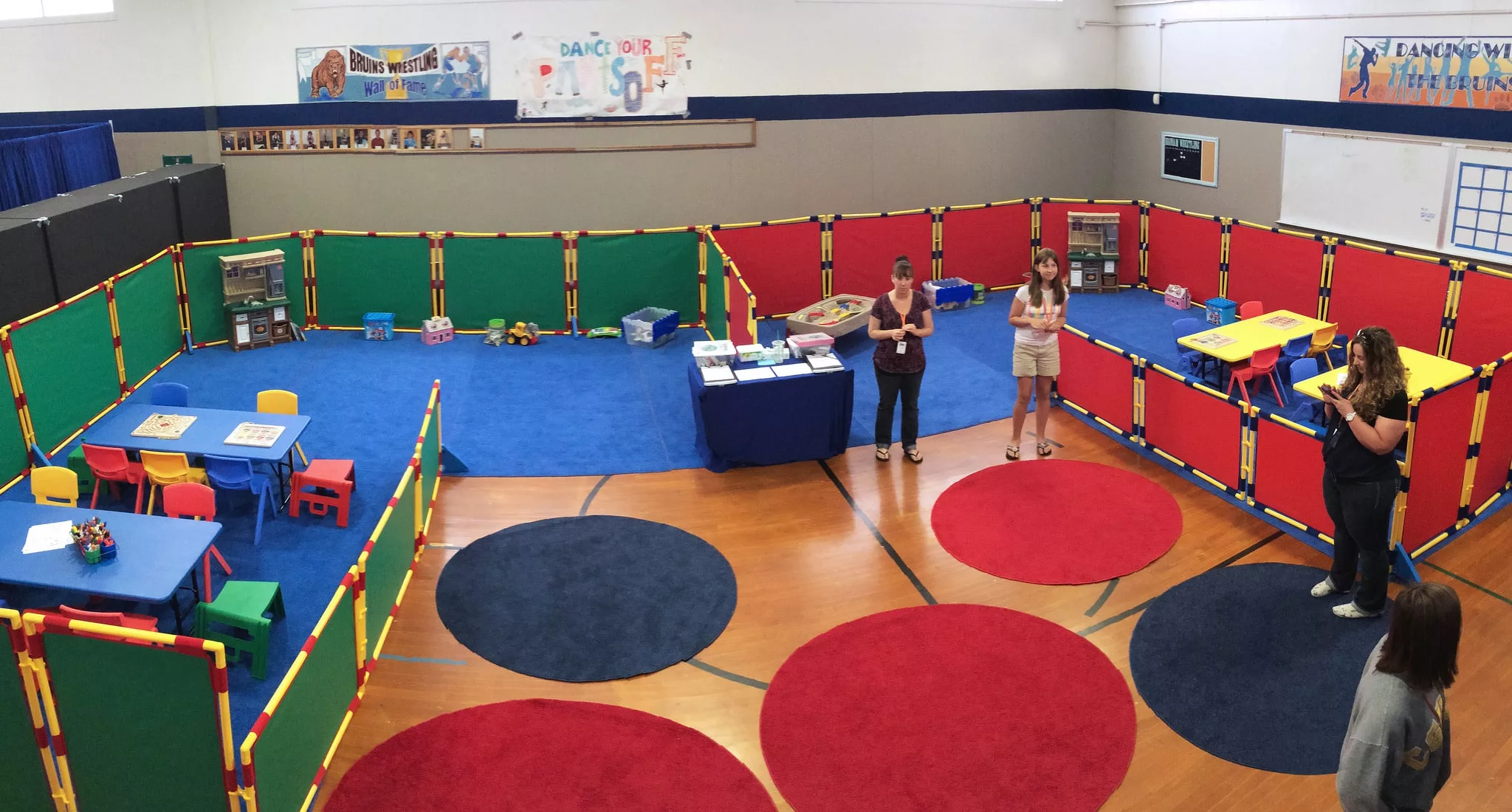
Creating a welcoming and efficient space
Set-up & tear-down
Setting up a nursery or Kid’s Ministry program in your church can be a challenge. But as a church plant in a temporary space-like a hotel or high school-it gets even trickier. Rule number one? No matter what your supplies and equipment look like, always create a set up and tear down checklist for your team. That way, it’s as simple as possible to replicate the set up week after week.
Speaking of simple…while your church plant is in a borrowed space, keep your Kid’s Ministry setup as simple as possible. Simple doesn’t have to mean boring! It can (and should!) still be a welcoming environment where your little ones can nurture and grow their faith. You don’t need a ton of play sets to keep kids entertained and excited about church. For many children, an abundance of activities of in a small space can lead to sensory overload. So narrow your set-up to key pieces that are comfortable and engaging, and won’t break your volunteers’ backs…or the bank.
You can consider some of the more mobile elements from our list of church nursery decor ideas. For instance, a small soft play area is a great way to engage children, and will travel well to your next location. Carpet tiles or gymnastics mats are also key to making your floor space safe for little ones.
Don’t forget to create a tear-down checklist, as well. Include specifics, like how many supplies go in each bin, where to store the bins, and any other pertinent information. That way, your set-up volunteers will have a smooth Sunday morning the following week.
Separating age groups
If you don’t have access to classrooms, consider using toddler fences, baby gates, or pipe and drape curtains to section off areas by age group. Even with a few children, it’s paramount to keep age groups separated, as pairing bigger kids with smaller children can become safety hazard.You can also look into play panels or portable walls, depending on your budget and the length of time you expect to use the equipment.
For an even more cost-effective option, ask your team to get creative! Are there other offices, or even hallways, you have access to that could transform into a warm and safe space for your smallest group of children? Thinking outside the box can save time and money.
Storage & supplies
Next up, you’ll need to build a list of supplies for your nursery and Kid’s Ministry. We recommend sorting your list by age group and getting specific to include quantities and descriptions.
For your church plant nursery, consider stocking:
- A changing pad
- Diapers
- Wipes
- Cleaning spray
- Cleaning wipes
- Garbage bags
- Gloves
- Simple snacks, like O cereal or crackers
- Small paper cups
- A water pitcher
- Toys & books (consider how many bins’ worth you may need per age group, depending on your church’s size)
- Hanging file box for curriculum materials (if needed)
- Crayons
- iPads or clipboard for check-in and check-out
- Rug or gymnastics mats
- Baby gates
- Portable cribs
- Foldable rocking chairs
For your Kid’s Ministry (older children), consider stocking:
- Construction paper
- Scissors
- Glue sticks
- Crayons (in separate containers for ease of distributing)
- Markers
- Pens, pencils
- Hanging file box for curriculum materials (if not using digital curriculum)
- iPads or clipboard for check-in and check-out
- Toys & books (age appropriate)
- Carpet squares (age appropriate)
- Large paper pads for morning message
Make sure to store all supplies in bins and label everything. This will make set-up and tear-down as easy as possible for your church plant team, and will help to prevent burnout and alleviate stress.

Process and program
A smooth check-in and check-out system
Check-in and check-out processes can vary significantly based on the size and stage of growth your church plant is in. If you use a church management software, many churches find it beneficial to tie-in your check-in/out system with your software. Planning Center and Realm are good options, depending on your needs.
For check-in technology, KidCheck offers a church plant discount, which can help keep your budget in check. Be sure to see what other equipment you may need to supplement your technology, like tablets and label makers.
If you’re excited about leveraging technology, tools like Planning Center have settings that allow you to conduct check-in and check-out digitally. No labels, stickers, or clipboards necessary. Or, you could pre-print your tags before service. This can save you some strife lugging equipment to and from your temporary church home.
Of course, when you’re just getting started, it may make sense to go the analog route for check-in. In that case, you’ll need a clipboard, label maker, check-in and check-out sheet, and a way to report attendance back to the church team. This can be a simple option in a pinch, but it may not be the most effective when your church plant is ready to scale or transition to a permanent location.
For your check-in set up, remember: keep it simple. For a church plant in a temporary space, try a 6-foot folding table, a couple of folding chairs, and a few smiling faces to man the station. Safety and simplicity are of the utmost importance at this stage.
Selecting curriculum
Thankfully, there are many reputable curriculum resources for you to choose from. This is great news, but it certainly can be overwhelming. Consider how you’d like to teach your curriculum: digitally or with physical books? Also consider how many children you’ll be serving, and what your projections are for the year ahead, to make a cost-effective choice.
For a church plant in a temporary location, you may find it more efficient to opt for a digital curriculum, rather than carting books, pens, and paper. Check out our top curriculum picks here. Some brands even offer a special discount for church plants growing their Kid’s Ministry.
Crafts and activities
Crafts and activities are an engaging, hands-on way to share the gospel with your little disciples-plus, they’re a ton of fun. The bad news? They can create a mess, which can be challenging when you have to quickly clean up.
This Children’s Ministry ideas list includes bible-based games and activities by age group that don’t make a mess, like prayer journaling and worship dance parties. No matter which crafts or activities you select, be sure to include all necessary supplies (and instructions!) in your set-up checklist.
Mobilizing Kid’s Ministry volunteers
Recruiting volunteers
Once you have your supplies, equipment, and curriculum lined up, it’s time to build the team you need to serve your church plant’s Kid’s Ministry.
As a growing church, this task may seem even more challenging than normal. This church volunteer recruitment guide has several ideas to help. For church plants, we recommend voicing your volunteer need through word-of-mouth and other channels like email newsletters, showing gratitude for volunteers, and making sure hardworking volunteers get a break while you’re in hyper-growth mode.
Preventing burnout
When you’re starting out as a church plant, you probably have a tight-knit, small group of people working hard day in and day out. What a blessing! These folks tend to wear many hats-like scheduling, setting up, tearing down, and even serving on various ministries. This can lead to their plates filling up quite quickly.
One of the best things you can do to support these key members is to help them avoid burnout. Consider creating a Volunteer of the Month program and showcasing it in your email newsletter. Find wasy to show appreciation for members of your team, whether they’re on staff or volunteers. You have a lot on your plate while growing your church, but by creating intentional time in to say thank you and celebrate wins, you’ll build a team that’s with your church for the long haul.
Booking back-up child care
Once you’ve taken preventative steps to help your church plant team avoid burnout, it’s time to asses how they’re doing. Showing gratitude is important, but it’s not always enough. Many church plants find it valuable to book extra hands to support the growing needs of their church.
Platforms like SitterTree were specifically designed with church child care in mind. On the app, you can find, book, and pay experienced, background-checked child care providers for your Kid’s Ministry and nursery. Churches love that you can create consistency with repeat sitters and get last-minute call-outs covered. Plus, SitterTree offers a special discount for church plants.
Booking child care might feel a little odd the first time you do it, but most churches report 5-star experiences and continue to lean on these child care platforms when needed. Booking child care is a tangible, effective way to support your team in this accelerated growth phase and make sure everyone stays happy and motivated.
Now that you have a plan for developing and growing the Kid’s Ministry in your church plant…
It’s time to gather a team that can help support you as you bring these plans to life. If you’re in search of extra hands to support your church plant’s growth and development, create an account on SitterTree to connect with child care providers who meet your unique needs.
Plus, SitterTree is excited to offer new church plant users $20 off their first job.
Get $20 offNeed help securing extra hands for your church plant’s Kid Ministry? Get started with an introductory call to learn how SitterTree can help.