SitterTree Resources: Insights on Babysitting and Childcare
  • Featured post

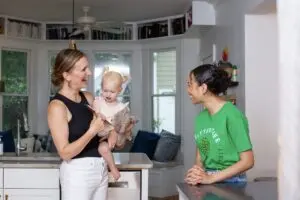
    How to ace your babysitting interview: Tips to land the job

    Our step-by-step guide offers babysitting interview tips to showcase your skills, answer common questions, and leave parents feeling excited to hire you. 1. Do your pre-interview prep Acing your babysitting interview starts long before the conversation even begins. With a little pre-interview preparation, you’ll present yourself as an organized sitter with the expertise the family […]
  • View all
  • Sitter Tips
  • Family Tips
  • Tips for Toddlers
  • Handwashing Challenge

    Hey Kids! SitterTree needs your help to support the child care needs of medical professionals in our city. These Atlanta heroes are away from their families for long hours. They are doing really important work, saving lives.

    You can help SitterTree ensure that while these mommies and daddies are at work, their kids are safe and having a great time at home.

    Here’s what we can do:

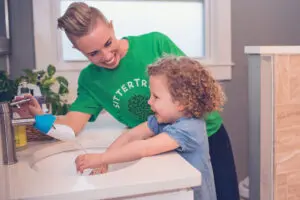
    SitterTree will donate a FREE booking for every Facebook or Instagram story showing a kid (hey, that’s you), babysitter, or even mom or dad washing their hands and singing their favorite #handwashing song.

    Be sure to use #handwashingsong and tag @sittertree to qualify your story. 
    Stories shared on more than one platform will qualify as one entry. 

    Here’s what else we can do:

    SitterTree is also partnering with our members, like your mom and dad, businesses, and congregations to purchase Sitter Bucks Gift Cards for these medical heroes.

    Since schools have closed, safe, reliable child care is really hard to find. It’s a good thing SitterTree has a really big group of cool babysitters who are ready to play!

    When your mom or dad purchases a Sitter Bucks Gift Card, they not only will save our heroes money, but they will also be showing support to our really cool, hard-working babysitters.

    What do you say? Are you ready to start washing?

    March 21, 2020
  • Talking Tips: Changing Diapers

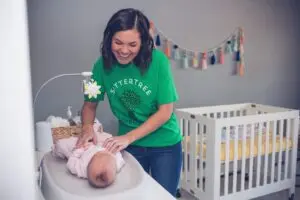
    Similar to getting dressed, this everyday situation is a perfect time to reassure your baby by explaining each of your steps while changing diapers. “There, we are all set. Do you feel better? I bet you feel better with a clean diaper.” Changing diapers does not always have to be a sticky situation.

    Conversation Starters for Changing Diapers

    • “Let’s get you all cleaned up. I have to wipe your bottom before we put a new diaper on. The wipe is a little cold, are you ready?”
    • “There we go, now you have a clean, dry diaper on. Do you feel better? Let’s continue our day!”
    • Is your diaper wet? Did you go pee-pee in your diaper? You have a wet diaper. Let’s take this wet diaper off of you.
    • Do you need a new diaper? Is your diaper clean? Is your diaper dirty? I am going to take off your dirty diaper and put on a clean diaper.

    Talking Tips are provided by Talk With Me Baby, an Atlanta organization working to bring the concept of language nutrition into public awareness and educate caregivers on the importance of talking with their baby every day, in an effort to close the word gap. 

    March 21, 2020
  • Bath Time: Talking Tips

    Bath time is the perfect opportunity for talking with your baby. A lot of babies love the bath and since you need to be constantly engaged with your baby, there are lots of opportunities to talk. Your baby will likely be active and happy in the bath, so use this time to describe their motions and identify their body parts for them.

    Conversation starters from Talk With Me Baby

    • “The water is nice and warm. Do you like the water? Look at these bubbles the soap makes. Bubbles are round and go pop! when we touch them.”
    • “Wow! You are making big splashes with your hands! Can you feel the water splashing all around you? Great job moving your arms around to make splashes!”
    • Let’s sit down in the tub. The tub is full of water. You are sitting in the tub!
    • Towels are soft. Do you feel that? We use our towels for drying things o ff. When you get out of your bath, I’ll use a towel to dry you off . Now let’s get you wrapped up in this towel so you get dry quickly.

    Talking Tips are provided by Talk With Me Baby, an Atlanta organization working to bring the concept of language nutrition into public awareness and educate caregivers on the importance of talking with their baby every day, in an effort to close the word gap. 

    March 14, 2020
  • Talking Tips: At Home

    Talking to your baby plays a key role in their development. Finding multiple ways throughout the day to talk, explain, and describe items to your baby can have significant positive effects on their language development. Talking to your baby while at home is an easy way to begin to build your baby’s vocabulary before s/he can speak.

    At Home Conversation Tips

    Your baby just arrived in your home, and could use a tour! Take your baby from room to room and point out important items in each room. Explaining what these items do and what they are for will lead to more conversation and teaching.

    You’re not the only one, grandparents, teachers, babysitters, and other caregivers can all contribute vocabulary words to your baby by starting to talk with your baby. Leave a short list of vocabulary words for your babysitter to practice with your baby.

    Conversation starters from Talk With Me Baby:

    • This is the kitchen. We cook our meals in the kitchen using the stove, the oven, and these pots and pans.
    • We’re standing in the living room. This is our couch, where we sit to relax. Here is a table that is holding a lamp. Lamps light up the room.

    Talking Tips are provided by Talk With Me Baby, an Atlanta organization working to bring the concept of language nutrition into public awareness and educate caregivers on the importance of talking with their baby every day, in an effort to close the word gap. 

    February 29, 2020
  • SitterTree App: Download NOW!

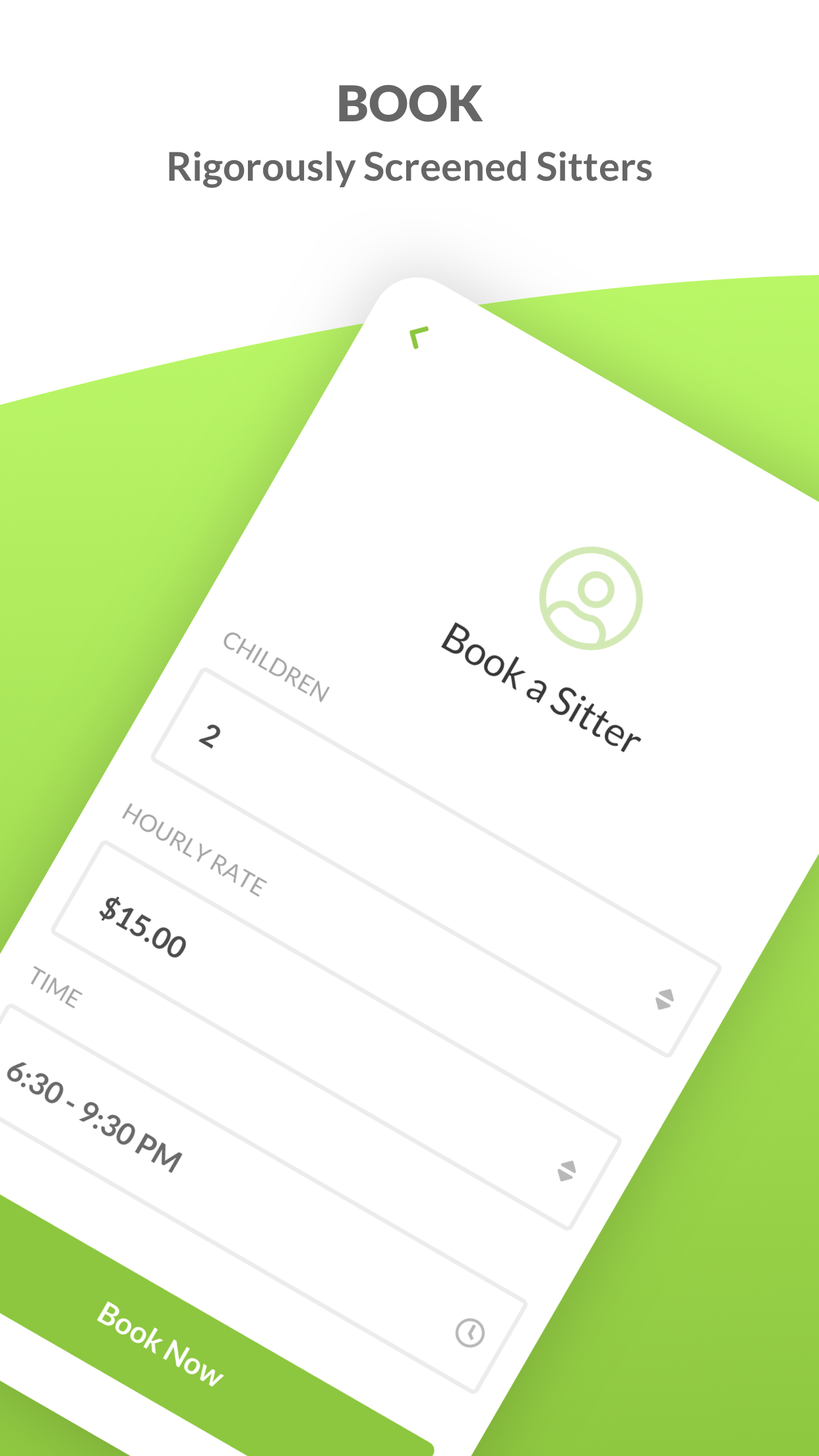
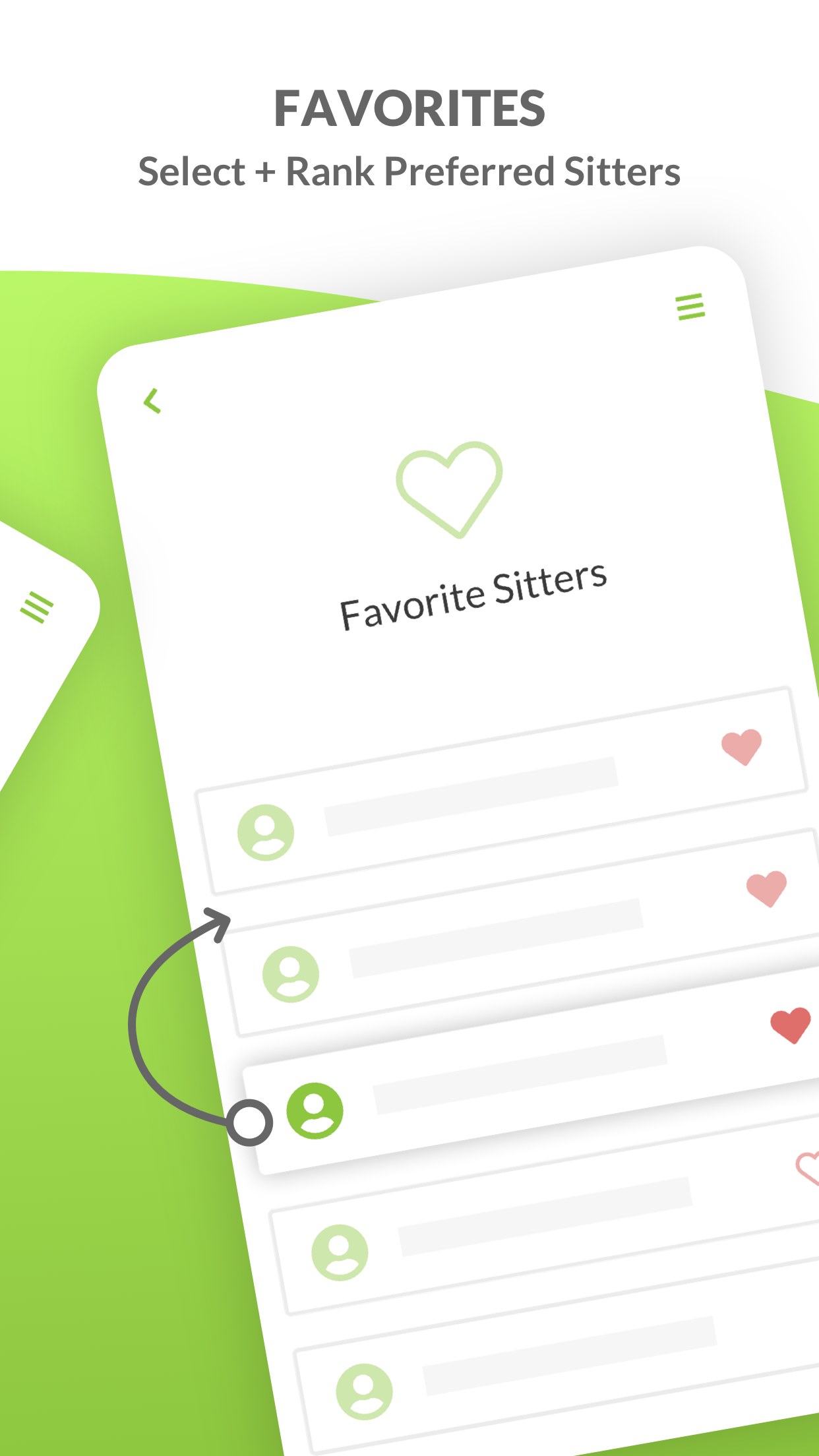
    SitterTree’s app is now available for download in the App Store! Book, rank, and pay sitters all in one place.

    1. Easier than Booking Your Neighbor: Book Atlanta’s top college and young professional sitters in seconds. Set your own hourly rate and select your sitter when you’re ready.
    2. Select and Rank Your Favorite Sitters: All the sitters you love most in one place. Set your Favorites on auto-assign, and we’ll do the rest!
    3. No need to keep cash on hand for the sitter: SitterTree will handle all payments, tips, and tax reporting. We send 100% of tips direct to our sitters. Tips are not required but always appreciated.


    ENDING SOON! Download the app and use Promo Code APP20 to receive your first month of unlimited bookings for just $20.

    February 25, 2020
  • The Challenges of Parenting

    Navigating Conflict and Fostering Forgiveness

    Parenting a household of boys provided me unique challenges. Every family is different and the way parents instill values and expectations in our children varies. My husband and I had two primary expectations from our sons: obedience and respect. Generally speaking, we operated that way.

    We usually allowed the boys the freedom to work out their issues by themselves. Maybe it was because I didn’t have the energy to deal with their conflicts, but I tried to not intervene. Most times, they could settle their conflicts amicably.

    So I thought.

    A few years ago, I wrote a book about rearing our family. In the end, I asked each son to write a couple of pages about his growing up-no guidelines or instructions. No one knew what the other brothers were saying. To my surprise, the two younger brothers wrote about the same incident, and both referred to it as a self-defining, life-changing moment.

    This incident happened when they were about 12 and 14 years old, and the wisdom in handling the situation goes to their dad. Here’s a recap of the event, as they wrote it for my book.

    Josh, the youngest son (now 40 years old) wrote the following:

    “I remember duels we had on basketball courts that could have been cast on the set of Gladiator. We would wake in the mornings best of friends and before the sun went down we were mortal enemies. This cycle continued for years, until one night when Dad decided he’d had enough. It was after one of our full-contact basketball games. Calling fouls showed weakness; we were into punching, tackling, and wrestling.

    Dad called us up to his room. Expecting to get punished, we were too mad to care. Two scraggly kids–battered, bruised and bleeding, clothes were torn and still breathing heavily– stood before a very disappointed dad, perfectly prepared to get our punishment so we could go to bed. We had left everything on the basketball court, as we did every night, but this time was different. As we stood there with Dad looking at us (now with my own children, I know what was going through his head), the silence became convicting.

    In his disappointment and frustration, he rose to a whole new level. It wasn’t until he told us to hug each other and say we loved our brother that the pain became too strong to bear, and we must have matured that night because I never remember physically fighting with Clint after that. I guess nothing will diffuse boiling testosterone-like hugging someone you despise at the moment and telling him or her you love ’em.”

    Clint, our fourth son (now age 42) wrote an almost identical version of the same event, after which he added these words:

    “We were expecting punishment, followed by a lecture on how we were to love and honor each other. He stood there for a minute and then the most dreaded words I’d ever heard came out. ‘Hug each other; y’all hug each other and say you’re sorry and you love each other.’

    We begged for corporal punishment over this! It didn’t work. Dad made us follow through. Talk about a humbling experience! He said one day we would learn to appreciate each other and enjoy the friendship we could have. He was right, and it impacted me to such a point that now I have used the same type of correction with my own children. It’s pretty amazing to see their hearts soften when they are displaying an act of kindness toward one another.”


    Let’s face it: Life is easier for everybody when there’s peace and harmony in our homes. If there’s a way to resolve disputes and reduce contentions, we want to find it.  But this doesn’t come naturally and children have to be led in a new direction and taught new skills. This means we parents have to be involved and engaged with our children.

    AND WE NEED A PLAN.  Here are some principles that worked for me.

    First, establish your standard of behavior (rules of engagement, if you will), based on the age and maturity of the child. Then we clearly define the terms. It’s easy to assume a child knows what we mean when we say something such as, “Be nice to your brother.” In our minds, this means sharing toys, showing kindness, etc. But a child might not interpret “being nice” to mean “don’t hit him over the head when he takes your toy.”  Take time to clarify what the expected behavior looks like.

    Second, decide ahead of time the consequences for disobedience and clearly describe this to the child. The method of punishment is a personal thing for parents, but it needs to be uncomfortable enough for the child to realize he’s broken the rules. He/she needs to know the expected behavior and understand what happens if it’s violated.

    Third, be consistent. Because parenting is so challenging, both physically and mentally, it’s easy to let things slide. Sometimes I was guilty of looking the other way when things happened (true confession here), but being consistent is vital. The consistency is more critical than the method of punishment. It also teaches a child to obey our word and not our mood.

    Fourth, follow through. If you’ve said it, do it. Disciplining a child is tiring and it often becomes necessary at the most inconvenient times! But it is all too important to make sure they connect behavior with consequences. Sadly, and tragically, not all families practice this. If they did, episodes we read about wouldn’t happen on school playgrounds. But we can control the atmosphere and operation of our homes.

     Finally, model behavior for them. In his book, Making Children Mind Without Losing Yours, child psychologist Dr. Kevin Leman says, “The only way we can ever teach a child to say ‘I’m sorry’ is for him to hear it from our lips first.”

    Our best defense against the pull of a degenerate society is to model in our homes the way we want to see the world. Mother Teresa said it well: “Try to put in the hearts of your children a love for home. Make them long to be with their families.” And I would add, “really love each family member.”

    All of us moms (and SITTERS)  have learned tricks and “hacks” when it comes to managing children. I would love to know what challenges you’re dealing with and how you’re handling them. Please comment below and share your hacks with us!

    A note about the author:

    Careen Strange is the author of Hello, Young Mothers, an honest and comical look at the realities of day-to-day motherhood. She and her husband, Burt, have been married 50 years, raised five sons, and are now grandparents to 11 grandchildren. To learn more about Careen and her work with young mothers, visit careenstrange.com.

    January 28, 2020
  • Baby signs strengthen baby minds

    Teaching babies to understand and make their own signs may give their brain a boost, as well as providing the means for their first early communications before they are capable of speech.  

    Tell Me More

    Imagine how your life would change if your baby could tell you what they wanted! It’s possible – with baby sign language. Baby sign language was introduced in the 1980s to help babies express themselves before they are able to use spoken words. How does signing work? The areas of the brain that control comprehension and the motor activity needed to form hand signals mature before those controlling the ability to form speech. We can take advantage of this natural process by equipping our children with the tools to express themselves non-verbally, through hand signs. 

    So What?

    Baby sign language helps babies that are ready to communicate but can’t quite bridge the gap to full speech. Since then, enough follow-up work has been done to show that babies exposed to sign language exhibit: 

    • Increased communication with their parents 
    • Earlier first words 
    • Larger preschool vocabulary 
    • Higher cognitive skills 

    These benefits may continue for years after children have stopped signing. Work shows that signing has the most impact when introduced around 5-6 months of age. Once you begin to use baby signs with your child, be persistent and use signs consistently, even if you don’t see your child using signs immediately – have patience. When your child does begin to sign, offer encouragement and continue introducing new signs. 

    A note about the author:

    Dr. Randa Grob-Zakhary, MD Ph.D. is the Founder of The Babyboost Institute for Early Learning and Development. Want more tips?  Purchase Babyboost: 50 Critical Facts on Amazon.

    January 10, 2020
  • The first five years: critical to brain development

    Unlike many other organs, our brains do not grow steadily over time, but rather, in growth spurts which are heavily concentrated during early childhood. 

    Tell Me More

    Incredibly, a baby’s brain reaches half of its adult size by 18 months, and 90% of its adult size by 4-5 years. Brain growth is achieved mostly by the formation of connections (synapses), and the development of myelin, a fat that sheaths some nerves to help to speed up nerve signal conduction. 

    Furthermore, a child is born with all the brain cells or neurons it will ever have. In most cases, new neurons are not created after birth. In fact, we are born with far more neurons than we can use. During the first years of childhood, tens of thousands of neurons will either live or die, based partly on the use-it-or-lose-it principle. 

    So What?

    During this period of accelerated growth, a two-year-old can form up to 2 million new connections per second! The development of connections between brain cells is extremely rapid and robust during the early years. This dramatic amount of early brain organization forms the basis of brain architecture for adult life. The brain ‘decides’ which connections to form, based partly on experience – something that parents and caregivers have direct control over during the first 3-4 years. Therefore, exposing your child to as wide a range of experiences as possible in these years is highly recommended, as such experiences are essential to the brain foundations that your child will carry with them for life. 

    A note about the author:

    Dr. Randa Grob-Zakhary, MD Ph.D. is the Founder of The Babyboost Institute for Early Learning and Development. Want more tips?  Purchase Babyboost: 50 Critical Facts on Amazon.

    January 4, 2020
  • Talking Tips: Reading

    Placeholder for Bre

    Reading Talking Tips

    Similar to getting dressed, this everyday situation is a perfect time to reassure your baby by explaining each of your steps.

    Even though your baby can’t read yet, introducing books and stories is an important part of their early literacy. You don’t have to feel like you need to read every word on each page. Let your baby lead the discussion and watch what catches their interest. Talk about what they are looking at or pointing toward.

    Conversation starters from Talk With Me Baby

    • “Which book would you like to read? Can you point to the book you’d like to read? Help me turn the page. Good job turning the pages!
    • “Do you see the green frog on this page? He lives in that pond! Where do you live? … You live here, in our home. The pond is the green
      frog’s home.”

    Download the Talk With Me Baby app for more talking tips.

    Talking Tips are provided by Talk With Me Baby, an Atlanta organization working to bring the concept of language nutrition into public awareness and educate caregivers on the importance of talking with their baby every day, in an effort to close the word gap. 

    December 29, 2019