SitterTree Resources: Insights on Babysitting and Childcare

-
Featured postOur step-by-step guide offers babysitting interview tips to showcase your skills, answer common questions, and leave parents feeling excited to hire you. 1. Do your pre-interview prep Acing your babysitting interview starts long before the conversation even begins. With a little pre-interview preparation, you’ll present yourself as an organized sitter with the expertise the family […]
- View all
- Sitter Tips
- Family Tips
- Tips for Toddlers
-

Children whose parents ask more questions about events and experiences tend to have significantly better memories than their less-questioned counterparts.
Tell Me More
The development of memory, like many functions, is extremely malleable during the toddler and preschool years. At this age, your child’s memory is particularly responsive to gentle but regular training.
One activity that is undeniable in its memory-boosting power is asking your child questions about past events or activities. Studies show that when parents ask children about details about specific events immediately after they’ve occurred, children remember more information and retain details for a longer period of time than those who are not asked as frequently. Furthermore, and most strikingly, questioning is linked to a stronger memory in general, and not just about the specific events questioned by the parents.
So What?
Strong memory skills are one predictor of school performance across subject areas because memory helps not only to retain facts but also plays a role in how the information is classified and retrieved. Therefore, the stronger your child’s memory skills are, the more they are likely to extract out of each learning experience. Knowing that simple everyday experiences provide opportunities to form a memory ‘gym’ can help you to maximize your child’s memory potential and therefore create important benefits for future academic learning.
A note about the author:
Dr. Randa Grob-Zakhary, MD Ph.D. is the Founder of The Babyboost Institute for Early Learning and Development. Want more tips? Purchase Babyboost: 50 Critical Facts on Amazon.
May 3, 2019 -
I am frequently asked, “What makes SitterTree different?” Of all the apps and childcare platforms, “what makes SitterTree so special?” The answer is profoundly simple: quality.
SitterTree’s #1 focus is providing quality babysitters to families in Atlanta and Athens. By quality, I am referring to young women who are role models, who are dreamers and achievers, who are compassionate, loving, hard-working, reliable, fun, and honest. They show up; they deliver; they go above and beyond for each family. These young women appreciate the privilege and responsibility of caring for children, and they take it seriously.
While quality is not the only thing which makes SitterTree special, we thought it important to highlight and celebrate the quality young women who have made our community what it is today.
In honor of assigning our 25,000th job, SitterTree is announcing our inaugural list of Top 10 Babysitters. As usual, we set the bar high for a sitter to qualify as a Top 10 Babysitter. And, as usual, our sitters delivered.
We could not be prouder to share SitterTree’s 2019 Top 10 Babysitters! These exceptional young women have completed a combined total of nearly 1,700 jobs. Since 2016, they have earned over $100,000 combined.
These sitters include current students from Emory University, Life University, Clayton State University, Clark Atlanta University, and Kennesaw State University.
The list includes young professionals working in health care, including pediatrics, public health, behavioral health, nursing, and chiropractic. The group of sitters hails from Atlanta, Athens, Covington, Marietta, and Alpharetta, as well as several sitters from out of state, including Damascus, Md., Miami, FL., Jackson, MS., and Italy.
Without further ado, please meet Atlanta’s Top 10 Babysitters:
In alphabetical order: Alsha McGilvery, Ashley Melendez, Hannah Matthews, Khadijah Grier, Lace McGuire, Nadia Nkansah, Sarah Frances Tomlinson, Tamara Kenon, Toyin Adebayo, Victoria Donnelly


What makes SitterTree so special? Each and every one of the faces you see above. They are the heart of our community, and they are why every family in Atlanta should trust SitterTree when it comes to booking a sitter.
April 30, 2019 -
We can’t solve the age-old debate about on-demand vs scheduled feedings here, but we can tell you that your baby has to get pretty worked up in order to ‘tell you’ that they are ready for their next meal.
Tell Me More
When is the last time you cried for a meal? Thanks to our modern lifestyles and an abundance of available food, most of us never reach the point of actual starvation and rarely experience extreme hunger. We would need to be pretty desperate to reach the point of screaming or crying for food. Crying from hunger represents a child’s last-ditch, all-out effort to get our attention – after all, it’s their only means of getting our attention at this early stage.
If we pay close attention to some of the behavioral cues displayed by babies before they cry, we can see that young babies are likely to make sucking sounds or movements, with perhaps a little squirming and limb waving before a how is released. Reaching the crying state is associated with a physical stress response – elevated levels of cortisol (a hormone released in response to stressful conditions that helps to mediate our emergency reactions) are released into the body. This is important to know because babies under stress are less likely to take in a full meal.
So What?
Implementing a feeding routine appropriate for your baby’s weight and age can help mealtimes begin and end peacefully. Though some babies drink just fine from breast or bottle after a bout of crying, many will take in a smaller meal than they should, and may also suffer gas after swallowing air while crying. If you feel that your child isn’t in a restful state at most mealtimes, trying out a schedule may have a positive impact. Just remember that growth spurts, weather, and other issues may have an impact on the schedule.
If you still encounter a lot of crying or fussiness in your young baby before or during mealtimes, swaddling can help. Swaddling has been shown to reduce stress responses and can be linked to improvements in both eating and sleeping behaviors.
A note about the author:
Dr. Randa Grob-Zakhary, MD Ph.D. is the Founder of The Babyboost Institute for Early Learning and Development. Want more tips? Purchase Babyboost: 50 Critical Facts on Amazon.
April 26, 2019 -
As the parent of any preschool age child knows, ‘why?’ is one of the most frequently asked questions in the young child’s language arsenal. But why ‘Why?’? In addition to fact-finding tools, children’s questions are a mechanism for developing critical thinking skills.
Tell Me More
Preschooler’s questions play an important role in mind development, not only for gathering facts. When children encounter a gap in their current knowledge, asking a question allow them to get targeted information exactly when they need it. Furthermore, the act of gesturing, using typical facial expressions, and asking questions reflects a learning process about what information to acquire, how to get it, and how to use it.
Children ask questions that are related in topic and structure to their stage of cognitive development. The content of these questions shifts over the course of development in ways that reflect the child’s conceptual development.
So What?
Parents and teachers can do many things to encourage and model complex thought processes. Thinking processes can be made more visible by modeling the kinds of questions that can be used to gather different kinds of information, and also even when answering children’s questions. So next time your child asks ‘Why?’ for the thousandth time, try to remember that you are giving your child fundamental information about something that has piqued their curiosity – you are helping your child find out about the world, as well as think critically about how it works.
A note about the author:
Dr. Randa Grob-Zakhary, MD Ph.D. is the Founder of The Babyboost Institute for Early Learning and Development. Want more tips? Purchase Babyboost: 50 Critical Facts on Amazon.
April 12, 2019 -
Using sensitive new methods that measure brain activity, it has been shown that the areas of babies’ brains that will later be responsible for speech become activated when merely listening to words at six months of age.
Tell Me More
Even before six months of age, babies’ brains are primed for acquiring language. Before six months, spoken words activate listening areas, but not speaking areas – yet. By twelve months of age, the activation of speaking centers during listening is very strong. This indicates that when a child hears spoken words, even before they are able to utter their first words, the brain is working to prepare the circuitry that will later help to form the words they are hearing.
These very recent and significant findings show us that hearing spoken works directly impacts on the neurological development of the brain areas responsible for language.
So What?
Work showing why and how early language experiences shape the brain’s future architecture underscores the importance of a robust early language environment. From the very beginning, conversation with your baby establishes the roots and foundations of good language skills.
A note about the author:
Dr. Randa Grob-Zakhary, MD Ph.D. is the Founder of The Babyboost Institute for Early Learning and Development. Want more tips? Purchase Babyboost: 50 Critical Facts on Amazon.
April 5, 2019 -
Scribbling and drawing have their origins in the same parts of the brain that will later be used for writing.
Tell Me More
Even toddlers, who can barely hold a crayon or pencil, are eager to ‘write’ long before they acquire the skills that formally prepare them to read and write.
Children who are encouraged to draw and scribble ‘stories’ at an early age will later learn to compose more easily, write more effectively, and with greater confidence that children who do not have this encouragement. Studies or very young children show that carefully formed scrawls have meaning to them and that this ‘writing’ actually helps them develop language skills.
So What?
Very young children take the first steps toward writing by drawing and scribbling; others may attempt to write notes and stories, it is most helpful to focus on the intended meaning of what very young children write, rather than on the appearance of the writing.
The toddler and preschool years provide parents with the opportunity to build a solid base upon which good writing skills will be developed in later years. Us this critical time in a child’s development by providing a print-rich environment: paper, crayons, large pencils, good modeling on your part (letting your child see you drawing and writing during everyday activities), and most of all, lots of encouragement and supportive responses.
A note about the author:
Dr. Randa Grob-Zakhary, MD Ph.D. is the Founder of The Babyboost Institute for Early Learning and Development. Want more tips? Purchase Babyboost: 50 Critical Facts on Amazon.
March 29, 2019 -
When I was the mother of five little boys under age 10, babysitters were of utmost importance-along with food, water, and fresh air. Yet, in the anticipation of time away from daily demands, I never gave much thought to ways I could make the babysitting experience more enjoyable for my substitutes. Of course, there were the obvious things such as explaining our routines, showing where things were kept, having food in the house, leaving a contact number, etc., but today I see there are things that make a difference in making the babysitter feel successful.
I know, because now… I AM THE BABYSITTER.
I’m now the GRANDMOTHER to eleven lovely, lively children under age 12.
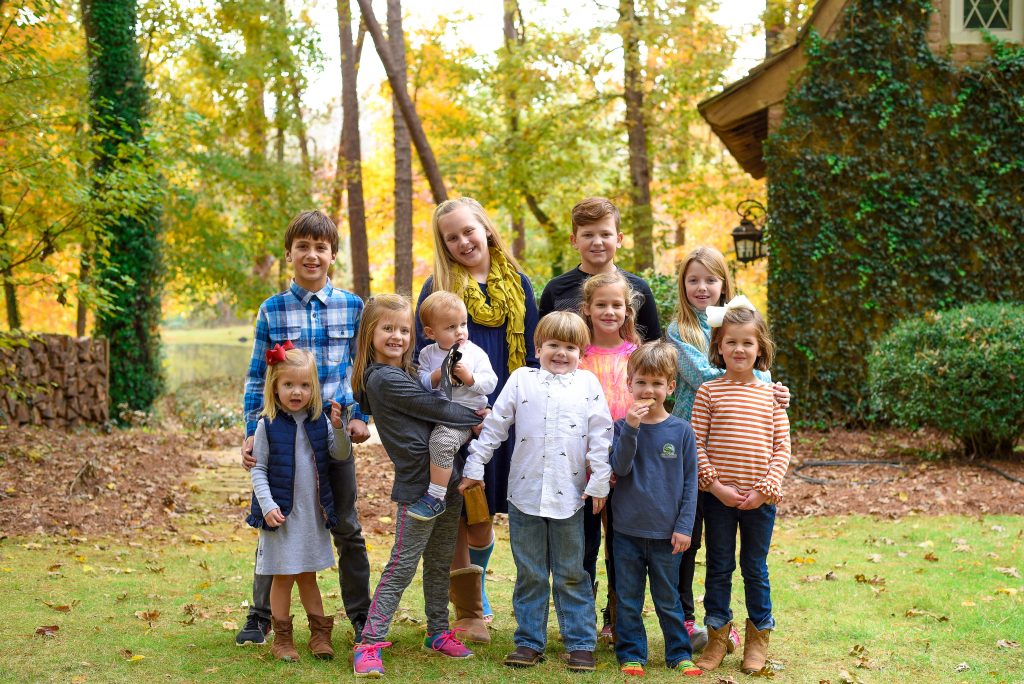
Don’t misunderstand: I love it!
But now I do look at things from a new perspective. I see the world through sitters’ eyes and I’ve started to take notice of some things parents can do to make the experiences more enjoyable for the sitter. For example:
- Transfer authority. Teach a child to respect the authority figure when the parents aren’t present. Once, one of our precocious little granddaughters was not being her usual cooperative self when she was left with a sitter. When asked why she was being so difficult she replied, “Well, you know I’m pretending that I’M in charge!” Having a clear understanding of who’s the boss makes the sitter’s job easier. The children need to understand they obey the sitter just as they do the parents (this is assuming they DO obey the parents☺).
- Have a checklist for good behavior. This worked well for us when we kept three of our grandchildren one weekend. Their parents provided for each child a list of expected behavior to be “checked off” by Pops and me. The points listed were age-appropriate for each child. The list included things such as helping set the table, taking a bath, picking up toys, being kind to each other, being helpful, being obedient, not whining, etc. Each child was diligent to fill the boxes with checks and repeatedly asked if I was going to show their mama and daddy. This took the parents’ expectations a step further than just the “Be good for Lollie and Pops!” phrase as they left. It gave definition to what “being good” looked like and the checklist was a measurable show of success. (I discovered one child erasing some of the checks on her sibling’s list because, in her opinion, that child didn’t deserve it-but that’s another topic!)
- Invite the babysitter for honest feedback. Allow the babysitter to be honest with you regarding your child’s behavior. Sometimes, in the defense of our own egos, we moms prefer denial rather than face negative or uncooperative characteristics in our children. Once when I had three small boys under five, a friend looked at me and made a cryptic observation: “Your kids aren’t minding you.” It made me mad, oh yeah, because I was embarrassed and frustrated. But it also motivated me to do something about it. Let’s be honest, our children don’t come into this world perfect (quite the opposite). We need teamwork, and sometimes a non-family member with our child’s best interest in mind can be a helpful asset. Rearing children is a work in process.
- Establish house rules. Explicitly communicate the amount of screen time a child is allowed. This has become a matter of importance in the culture we now live in. No doubt parents’ opinions vary, but it’s also no doubt that children’s curiosity has no boundaries. In our own home, when I am the babysitter, the parents and I have reached an agreement, to wit, no screen time unless authorized by Lollie and Pops. And if there is an argument, the screen devices are left at home the next time. My theory is that I want our grandchildren to come to see us, not come stare at the latest technology. (But one caveat: when the parents leave town and we’re babysitting their five children at their home, the iPads hid under their dad’s underwear have to be turned off so the alarm doesn’t go off in the middle of the night!)
- Keep everyone fed…well. Have good quality food for meals and snacks-for the sitters (I’m kidding!), but seriously, good protein food makes the challenge of rearing children a million times easier (more or less). In my own journey of motherhood, I learned that a snack of cheese or nuts, boiled eggs, or beef jerky could tame many childhood tempers-as well as my own!
- Reassure your child before you go. Audrey Penn, the author of the book, The Kissing Hand, describes a mother who provided a “kiss” for her anxious child to hold on to until she returned. You can do this by letting the child keep something of yours while you’re gone, some special item they’re responsible for in your absence. Or it might be to manage a task, such as putting an ice cube in the orchid to keep it alive (you might need to specify not to pick it). One of my granddaughters volunteered to keep my diamond earrings until I came back to see her; she’s a little too smart for her age.
- Give yourself permission to leave your child. When you, as a busy mom, have done all you know to be a good mother, cut yourself some slack. You need rest and recovery in order to do your job well. Secure a capable, qualified sitter you feel comfortable with and RELAX. Children react to our leaving them in various ways for different reasons (again, another topic for another day). Our boys demonstrated all extremes. One of them hung onto the door handle of the car, begging us not to leave him (we were going to CHURCH, for heaven’s sake!), while another one told me they didn’t need a babysitter; they needed a mansitter!
In the end, all parents need a little time away in order to make the most of their time together with their children. So…trust your sitter, set them up for success, and go enjoy your time!
A note about the author:
Careen Strange is author of Hello, Young Mothers, an honest and comical look at the realities of day-to-day motherhood. She and her husband, Burt, have been married 50 years, raised five sons, and are now grandparents to 11 grandchildren. To learn more about Careen and her work with young mothers, visit careenstrange.com.
March 26, 2019 -
The ability to understand what someone else is feeling and thinking represents the pinnacle of a series of developmental steps toward the development of a mature mind.
Tell Me More
In the first few years of life, your primary focus was yourself. You wanted food, warmth, or an engaging toy, and you were willing to cry very loudly to get it. You were unapologetically egocentric. You can hardly blame yourself because you hadn’t developed to a point where you could look past your own needs. Then, at about the age of three or four, you underwent something of a magical transformation. You became a genius at mind reading. Suddenly you were capable of looking past yourself and could take into account the wants, needs, knowledge and mental states of other people. You had developed what some researchers call a theory of mind.
So What?
Theory of mind refers to a person’s ability to create theories about other people’s minds – what they might be thinking, how they might be feeling, what they might do next. As individuals, we are able to make these assumptions easily, without even recognizing that we are doing something fundamentally astonishing: that is, making predictions about what is going on in other people’s heads. Even more amazingly, these predictions most often prove correct. But as parents and carers, how can we understand what’s going on in our child’s mind?
Every child experiences a unique journey towards developing a theory of mind. However, an atypical development of the theory of mind can sometimes be associated with certain forms of developmental delay or learning disabilities. Being familiar with the concept of theory of mind and its typical progression throughout infancy and early childhood can help you be on the lookout for potential concerns.
A note about the author:
Dr. Randa Grob-Zakhary, MD Ph.D. is the Founder of The Babyboost Institute for Early Learning and Development. Want more tips? Purchase Babyboost: 50 Critical Facts on Amazon.
March 22, 2019 -
More than just a product of too little sleep, over-tiredness is actually a real condition with a hormonal explanation.
Tell Me More
A very common, and the least recognized reason for sleep problems between the ages of 1-2 years is over-tiredness. Over-tiredness and its correction have a neural basis. Children in the throes of a meltdown are frequently described as suffering from being ‘over-tired’.
While this explanation is often accepted skeptically, over-tiredness actually is a real problem with a real physiological explanation behind it. When a person is deprived of sleep, the brain sends out a stress signal, which in turn releases adrenaline. This results in feeling very awake, even if our ability to function is deteriorating.
So What?
Understanding the neural basis for over-tiredness can help in its prevention, or in the worst-case scenario, minimization of its impact. For example, once a child reaches the point of over-tiredness, they are often more sensitive to stimulating activities/environments, making them even more “wired’, when they are actually in real need of rest.
Creating an especially quiet, tranquil environment can prompt the body to wind-down in preparation for sleep. Over-tired children may need your help to settle down, for example, counting in the dark together or telling a story in a dimly lit room. These gentle moments can provide a calm and soothing transition to a more restful state and eventually, sleep.
A note about the author:
Dr. Randa Grob-Zakhary, MD Ph.D. is the Founder of The Babyboost Institute for Early Learning and Development. Want more tips? Purchase Babyboost: 50 Critical Facts on Amazon.
March 15, 2019